Summer Tips to Get Your Child Ready For Kindergarten
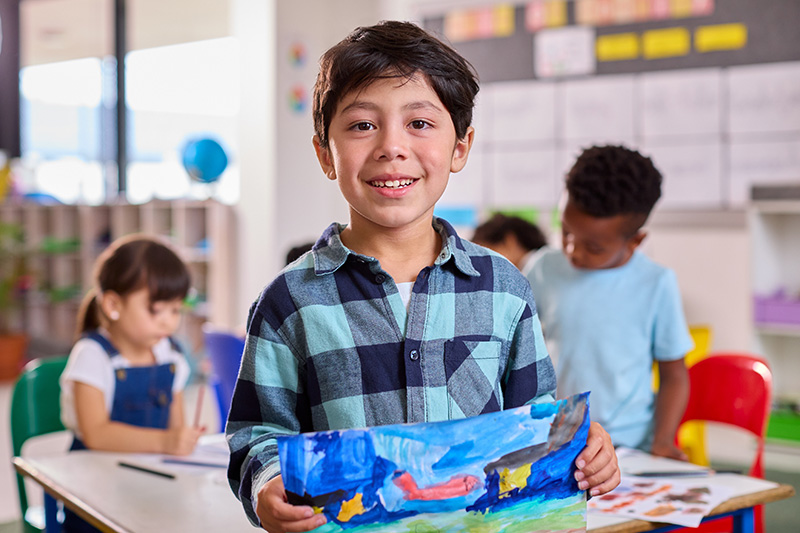
With just 10 weeks until Kindergarten, summer provides the perfect opportunity to help your child build the skills and confidence they’ll need for a successful start at school in the fall.
The goal is to use everyday moments to play and strengthen important developmental skills with family. Whether it’s practicing independence or developing social-emotional skills, these small efforts throughout the summer can make a big difference.
Below are some tips to make the most of the weeks before kindergarten with special insights from local Early Childhood Development experts.

Week 10:
Schedule doctor’s visits & immunizations
Local expert Rachel Charters highlights essential resources to help parents prepare for their child’s doctor’s appointments this summer.

Week 9:
Practice writing full names using capital letters and lowercase letters.
One of the first skills children learn in school is how to write their full name. Practicing at home can help children feel confident and prepared for their first day.
Week 8:
Walk on the Born Learning Trails and explore local parks.
Visit the United Way Born Learning Trails across Champaign County and turn a simple walk into an exciting learning adventure!
Week 7:
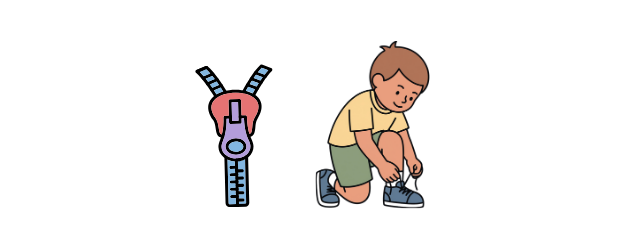
Practice independent skills like zipping and tying shoes.
Independent skills build confidence and gets your child ready for kindergarten where they are expected to try things on their own.

Week 6:
Roleplay school and visit school grounds.

Week 5:
Visit the library and make reading a part of every day.
Local expert Jill Duden shares why reading just a few minutes each day can help children develop language skills, expand their vocabulary, and strengthen their imagination.

Week 4:
Practice answering questions about family members including names, age, etc.
Week 3:
Gather school supplies and clothing.
Here are some resources that will help get the free supplies needed to start kindergarten.

Week 2:
Start school bedroom routine to get adjusted to the change.

Week 1:
Change can be overwhelming. Plan extra time for cuddles and encouragement.

1 Week

About the Author
Change can be overwhelming. Plan extra time for cuddles and encouragement.
Change can be overwhelming for little ones and finding age-appropriate resources to help prepare them for major milestones, like the first day of school, can set kindergarteners up for success. Reading books with children who are about to start kindergarten is a wonderful way to bond while exploring school routines and discussing feelings of nervousness, anxiety, and excitement.
Snuggling up together with books such as Llama Llama Misses Mama by Anna Dewdney or The Kissing Hand by Audrey Penn can help ease going-to-school worries. As you read, talk with your child about how the characters are feeling, what they are experiencing, and how they overcome their fears. These conversations provide reassurance, build confidence, and help children feel more prepared for their own kindergarten journey.
Additional ways to bond include starting new traditions to celebrate the start of the school year, such as packing a backpack together, choosing a first-day outfit, and taking a photo on the first day of school. These activities can help your child build excitement and feel supported. Most importantly, offering plenty of hugs and encouragement can remind your child that while they may be starting school, they are not facing this new adventure alone. Family support and lots of love can help them feel confident and ready for the journey ahead.
Additional Titles for Going to School:
Pete The Cat, Rocking My School Shoes by Eric Litwin
If You Take a Mouse to School by Laura Joffee Numeroff
The First Day of School by Mercer Mayer
Time for (Earth) school, Dewey Dew by Leslie Staub
Tomatoes in My Lunchbox by Constantia Manoli

10 Weeks

Schedule doctor’s visits & immunizations
Starting kindergarten is an exciting milestone, and making sure your child is up to date on their well child visit, vision and hearing screenings, and immunizations is an important part of preparing for a successful start. These appointments help identify any health, developmental, vision, or hearing concerns that could affect a child’s ability to learn, communicate, and participate in the classroom. Scheduling these visits before the busy back to school season also gives families time to complete any required paperwork and address concerns before the first day of school.
Preventive healthcare visits and immunizations help keep children healthy, safe, and ready to learn. Well child visits allow healthcare providers to monitor growth and development, answer questions, and provide guidance on nutrition, sleep, behavior, and overall wellness. Vision and hearing screenings help ensure children can see the board, hear instructions, and fully engage in learning activities. Staying up to date on recommended immunizations protects children from serious illnesses and helps prevent the spread of disease within schools and the community. By scheduling these appointments early, families can help their children begin kindergarten healthy, confident, and ready to learn!
To find community resources on dental services, hearing and vision screenings, and immunizations, visit the Champaign-Urbana Public Health District’s websites:

2 Weeks

About the Author
Start your school bedroom routine to get adjusted to the change.
As kindergarten gets closer, a steady sleep schedule can help your child feel ready. A simple bedtime routine helps children get enough rest. It can also make school mornings easier for the whole family.
Start a few weeks before school begins. Move bedtime a little earlier each night. Make the evening calm with simple steps, like taking a bath, brushing teeth, reading a favorite book, and turning down the lights. Try to keep the same bedtime and wake-up time every day, even on weekends. This helps your child’s body get used to a healthy sleep routine.
Turning off screens at least one hour before bed can also help your child sleep better. When children are well rested, they may wake up happier, pay attention better in class, and enjoy starting kindergarten. Good sleep habits now can help your child have a strong and confident school year.
Find more information at Sleep and Health: Why Rest Matters for Your Child—and Your Whole Family – HealthyChildren.org

3 Weeks

Gather school supplies and clothing
Back to school can be exciting and overwhelming at the same time. Many stores will have school supply lists based on the school itself. Many teachers have specific extra things that they need for the school year.
Here are some resources that will help get the free supplies needed to start kindergarten.
- ChambanaMoms.com Back-to-School Series
- Y on the Fly Backpack and School Supply Drive
- Champaign Free School Supplies
- Free clothes and school supplies Champaign County
Save the Date
Y on the Fly End of Summer Celebration
Friday, August 7, 2026 from 4-6pm
Stephens Family YMCA
2422 W Springfield Ave, Champaign, IL 61821
5th Annual Family Back to School Health & Resource Fair
Saturday, July 25, 2026 11am-4pm
201 W Kenyon Rd Champaign, IL
CUPHD parking lot

4 Weeks
Practice answering questions about family members including names, age, etc.
As children prepare for kindergarten, one of the most important skills they can practice is talking about themselves and the people who care for them. During the first few weeks of school, teachers often ask simple questions to help students get to know one another and build confidence speaking in a group.
Practicing family questions at home can help your child feel more comfortable sharing information and communicating with trusted adults.
Here are a few questions to practice together:
- What is your full name?
- How old are you?
- Who lives in your home?
- What are your parents’ or caregivers’ names?
- Do you have any brothers or sisters? What are their names?
- Who helps take care of you after school?
- Who would you ask for help if you needed it? Share some scenarios.
Keep the conversation fun and relaxed. You can ask these questions during dinner, while riding in the car, or as part of bedtime conversation. Playing “interview” is another great way to practice—take turns asking and answering questions, and let your child be the interviewer, too.
As your child becomes more confident, encourage them to answer in complete sentences. For example, instead of saying “Emma,” they can practice saying, “My sister’s name is Emma.”
This is a great opportunity to talk about how every family looks different. Some children live with parents, grandparents, foster families, or other caring adults. Help your child practice talking about the people who are important in their life using language that reflects your family’s unique situation.
These conversations do more than prepare children for classroom introductions. They build communication skills, strengthen confidence, and help children learn to share information with trusted adults when needed.
A few minutes of practice each day can make a big difference as your child gets ready for a successful start to kindergarten!

5 Weeks
About the Author
Visit the Library and make reading a part of every day!
Looking for a simple way to support your child’s learning and development?
A trip to your local library is a great place to start! Libraries offer much more than books—they provide opportunities for young children to explore, play, and learn alongside caring adults. Many libraries host story times, music and movement programs, and hands-on activities designed specifically for babies, toddlers, and preschoolers. These experiences help build early literacy skills while creating fun memories together.
Making reading part of your daily routine doesn’t have to take a lot of time. Reading just a few minutes each day can help children develop language skills, expand their vocabulary, and strengthen their imagination. Let your child choose books that catch their eye, even if they want to read the same one over and over again! For example, reading a favorite book like Brown Bear, Brown Bear, What Do You See? by Bill Martin Jr. and Eric Carle can spark conversations about colors, animals, and sounds. After reading, try a simple activity such as pretending to move like the animals in the story or looking for animals during a walk outside.
Your local library is a free resource filled with books, programs, and ideas to support your child’s growth. By visiting regularly and making reading a part of everyday life, you’re helping your child build important skills while sharing special moments together. The stories you read today can help create a lifelong love of learning tomorrow.

6 Weeks

About the Author
Roleplay school and visit school grounds
Preparing your child for kindergarten doesn’t require endless flashcards; instead, some of the most effective preparation happens through familiarization and play. One of the best ways to ease first-day anxieties is to visit the school grounds together over the summer. Walk or drive the route to the school, play on the playground if it’s open, and attend any scheduled orientations. By exploring the physical space when it’s quiet and pressure-free, your child will associate the school building with fun rather than the unknown, making the environment feel welcoming and safe before the first bell even rings.
Above all, it is vital to remember that practicing social skills is far more important than mastering any academic milestone. While it’s tempting to drill letters and numbers, kindergarten teachers consistently emphasize that social-emotional readiness is the true foundation for school success. A child who knows how to share, cooperate, follow directions, and navigate a group setting is infinitely more prepared for the classroom than one who can count to 100 but struggles with basic social interactions. Academics will naturally follow, but learning how to coexist happily in a community of twenty other children is the most critical hurdle of the transition.
You can easily build these vital social skills at home by roleplaying the school day. Turn your living room into a classroom and take turns playing the roles of “teacher” and “student.” Focus heavily on relational scenarios: rehearse how to introduce themselves to a new classmate, how to ask a peer, “Can I play with you?” and how to gracefully take turns or share a toy. You can also practice structural social skills like raising a hand to speak, sitting patiently on a rug for storytime, and listening to multi-step instructions. Another suggestion is to practice asking for help appropriately and practicing skills like opening lunch containers. By transforming these abstract social expectations into a playful game, you strip away the pressure, giving your child the confidence and emotional toolkit they need to thrive socially from day one.
Learn more

7 Weeks
Practice independent skills like zipping and tying shoes
Why Independent Skills Matter
Starting kindergarten is an exciting milestone for children and families. It’s often the first time kids step into a structured school environment, build new routines, and take on more responsibility for their daily needs. One of the best ways to help your child feel confident and ready is by practicing independent self-help skills at home—especially things like zipping jackets, using the bathroom, putting on backpacks, and tying shoes.
These small tasks might seem simple, but they play a big role in building confidence, independence, and readiness for the classroom.
In kindergarten, children are encouraged to take care of many of their own needs. Teachers support students, of course, but there are moments throughout the day when children are expected to try things on their own—getting dressed for recess, managing their belongings, or organizing their materials.
When children already have some practice with these skills, they feel more capable and less frustrated. It also helps the classroom run more smoothly, giving teachers more time to focus on learning activities.
Independent Skills to Practice
Start with Zipping a Jacket
Zipping a jacket is often one of the first independence skills children master. It can take time and practice, so breaking it into steps helps:
- Hold the bottom of the zipper steady
- Insert the zipper piece into the base
- Pull the zipper up slowly while holding the fabric
Let your child try on their own first before stepping in to help. Even partial success builds confidence.
Using the Restroom On Their Own
Practice the full bathroom routine from start to finish so that it becomes automatic.
- Build urgency awareness and practice not waiting until the last second.
- Teach wiping basics clearly – some kids need a lot of repetition
- Make handwashing a non-negotiable habit
- Practice public restroom skills with automatic flushes
- Teach them to tell the teacher if they have an accident
This skill is essential and so important for school.
Open and Close Backpack
Backpacks are a big part of kindergarten life. Practice opening and closing zippers, putting items inside, and wearing the backpack correctly. Encourage your child to:
- Pack and unpack simple items like a folder or snack
- Zip and unzip compartments independently
- Make sure contents in backpack aren’t sticking out
- Put the backpack on and take it off without assistance
The more familiar they are with it, the more comfortable they’ll feel on the first day of school.
Shoes: Velcro First, then Laces
Many kindergarteners start with Velcro shoes, which are great for building independence. If your child will wear tie shoes, practice can begin early and be fun:
- Use rhymes like “the bunny goes around the tree” to guide steps
- Practice on shoes while they’re off their feet
- Celebrate small progress, even if they can only complete part of the process
Tying shoes takes time, and it’s completely normal for children to need ongoing support.
Other Independent Skills
The best learning happens in everyday moments. Build independence skills into your routine:
- Let your child dress themselves in the morning
- Have them brush teeth and brush hair
- Encourage them to pack their own backpack
- Offer extra time so they can try things without rushing
Patience is key. The goal isn’t perfection—it’s practice.

8 Weeks
Walk on the Born Learning Trails and explore local parks!
Make Learning an Adventure This Summer on the Born Learning Trails
Looking for a fun, free activity for your family this summer? Visit the United Way Born Learning Trails across Champaign County and turn a simple walk into an exciting learning adventure!
Did you know that 90% of a child’s brain develops by age 5? The early years are filled with opportunities to learn, grow, and explore—and the Born Learning Trail helps make the most of every moment.
This family-friendly outdoor trail features colorful, interactive signs in English and Spanish that encourage children and families to learn through play. Along the way, families can enjoy simple activities that build language, literacy, and social-emotional skills while staying active outdoors.
Following the trail’s theme—Watch! Stop! Learn! Play!—parents and caregivers are encouraged to follow their child’s curiosity, ask questions, and make learning part of everyday fun.
Whether you’re counting, moving, talking, or imagining together, every stop on the trail helps support your child’s development and school readiness.
This summer, get outside, get moving, and discover how play can spark a lifetime of learning. Visit a Born Learning Trail near you and create memories while helping your child grow!
Born Learning Trail Locations
Champaign
- Human Kinetics Park
1501 N. Market St., Champaign
Sponsored by Human Kinetics - Garden Hills Park
1701 Bloomington Rd., Champaign
Sponsored by Champaign Rotary
Urbana
- Urbana Early Childhood School
2202 E. Washington St., Urbana
Sponsored by Champaign County Association of Realtors
Mahomet
- Bridle Leash Park
902 W Dianne Ln., Mahomet
Sponsored by the Rotary Club of Mahomet and Mahomet Parks and Recreation
Rantoul
- Wabash Park
520 E. Wabash Ave., Rantoul
Sponsored by Emerging Community Leaders - Chris Rudzinski Park
401 W. Grove Ave., Rantoul
Sponsored by Emerging Community Leaders
St. Joseph
- Kolb Park
205 W. Sherman, St. Joseph
Sponsored by Keller Williams
Savoy
- Dana Colbert Park
203 E. Church St., Savoy
Sponsored by Emerging Community Leaders and the Village of Savoy

9 Weeks
Practice writing full names using capital letters and lowercase letters
Starting kindergarten is an exciting milestone! One of the first skills children learn in school is how to write their full name. Practicing at home can help children feel confident and prepared for their first day.
Why Practice Writing a Full Name?
Writing a full name helps children:
- Recognize the letters in their name
- Develop fine motor and handwriting skills
- Learn the difference between capital and lowercase letters
- Build confidence and independence
Teachers often ask students to write their names on papers, artwork, and classroom activities, so knowing how to write a full name is a great kindergarten readiness skill.
Using Capital and Lowercase Letters
A name should begin with a capital letter, followed by lowercase letters.
For example:
- Emma Johnson
- Liam Smith
- Ava Garcia
Fun Ways to Practice at Home
Trace and Write
Write your child’s name with a highlighter and have them trace over the letters. As they gain confidence, encourage them to write the name independently.
Use Different Materials
Practice writing names with:
- Crayons
- Markers
- Sidewalk chalk
- Finger paint
- Play dough letters
Make It a Game
Have your child find the capital letter that starts their name and match it to the lowercase letters that follow.
Practice a Little Each Day
Just a few minutes of name-writing practice each day can make a big difference. Keep activities fun and positive.
Helpful Tips for Families
- Encourage proper pencil grip.
- Celebrate effort, not perfection.
- Model correct capitalization when writing your child’s name.
- Be patient as your child learns letter formation and spacing.
Ready for Kindergarten!
Learning to write a full name is an important step toward kindergarten success. With regular practice and encouragement, children will build the skills and confidence they need to start the school year ready to learn. We look forward to seeing all of our incoming kindergarten students proudly write their names in the classroom!

Find math everywhere
- Talk math. Use words such as more, less; longer, shorter; heavy, light; etc.
- Count out LOUD every day. Start at 1 and count as you walk, put plates on the table, add apples to your grocery cart or as they wash their hands. Ask your child to count with you. Pause and ask, “What number comes next?”
- Hold up 5 fingers in front of your child, then quickly hide your hand. Ask, “How many fingers did you see?”
- Name and describe shapes when you see them. “That is a square napkin. The box of cereal is a rectangle. That tire is a circle.”
- Count: “Let’s count the blocks.”
- Compare: “Which plate has more crackers?”
- Explore: “Let’s go on a shape hunt—can you find circles?”
- Question: “I wonder how many cars we can fit in this basket?”
- Sort: “Let’s put all the yellow pieces in this pile.”

Related Books

Focus on “me”
- Make a book by stapling or tying blank pages together with yarn.
- Find photos of your child to put in the book. Give them magazines to cut out pictures of things they like.
- Ask your child questions and write the question and their exact answer in the book: My name is _______________; I like to _______________; My favorite color is _______________; My favorite food is _______________; I like it when my mom _______________, etc.
- Make another page of personal information your child should know and practice this often: My name is_______________; I am a _______________; I was born on _______________; My address is _______________; My phone number is _______________; I'm allergic to _______________, etc. In an emergency I should call _______________.

Related Books

Get moving
- Save plastic water or soda bottles to use as bowling pins.
- Toss bean bags or socks in a basket.
- Balance books on your head while walking.
- Visit a safe outdoor space so you can run and play together.
- Play toss and catch together with a rubber ball.
- Set up an obstacle course (inside the house or out). Run through it or steer a tricycle/bike through it.
- Teach your child games like “Hokey Pokey,” “Red Light, Green Light,” and “Simon Says.”
- Suggest your child try to move like different animals: hop like a rabbit, slither like a snake, fly like a bird.
Related Books

Get ready for routine
- Before the first day of school, choose school supplies and label them
- Play school together and take turns being the teacher.
- Eat a meal from a lunch box or tray. Show your child how to clean up and open milk/juice cartons.
- Visit your child's school and explore the classroom and playground.
- Talk about the kinds of things they will be doing at school.
- Two weeks before school starts, adjust your child's bed time to what it will be during the school year.
- Create a healthy routine that allows time for family meal, homework, play, bath, teeth brushing and a bedtime story.
- Practice zippers, buttons, opening their backpack, putting on tennis shoes. Not all children have mastered shoe tying by the first day of school and that's OK. Just remember to practice once in a while.
Related Books

Learn with play
- Turn household chores into learning games—match socks as you fold laundry or line up canned goods by size. These activities can build math and cooperation skills. Feeling useful also helps children feel good which encourages them to continue to want to be helpful.
- Children can help set the table. Extend their memory by giving 3 step directions "Please get the milk from the refrigerator. Set it on the table. Get the napkins."
- Make matching pairs of cards with stickers, drawings or pictures cut from magazines.
- Use Legos to create color patterns. Have your child continue the pattern: red, yellow, black, red… what comes next?
- Play seek and find. "Find something yellow in the kitchen." "Find something that is square."
- Pour and measure together in the kitchen, the bathtub or use a bucket of water outside on a hot summer day filled with measuring spoons and cups.

Related Books

Practice letters & words
- Use an uppercase letter followed by lowercase letters when writing your child’s name. For example: “Matthew.”
- Make a name card for each member of your family. Help your child place them at the dinner table where everyone sits.
- Use letter magnets on the refrigerator or a cookie sheet to spell their name and familiar names: Mom, Dad.
- Place alphabet letters in a container. Pull them out one at a time and name them.
- Invite your child to “read” familiar business signs as you run errands.
- Read alphabet books and allow your child to name the letters they recognize.
- Read a book together, then ask your child to go back and look for a certain letter of the alphabet found in the story.
- Write the alphabet on paper. Sing the ABC song slowly and have your child touch each letter as you go.
Related Books

Read together every day
- Store your child’s books in a special place that’s easy to reach, such as a basket or low shelf.
- Place a small rug or pillow nearby to create a comfortable space for reading.
- Get a library card for your child (and yourself if you don’t already have one).
- Find a place to read together away from distractions. Hold your child as you read to help develop a positive attitude toward reading.
- Children enjoy and learn by repetition, so it’s OK if they want you to read the same books over and over.
- Talk about the story as you read. Ask questions and point out details in the pictures.
- Ask your child to retell the story in their own words.
- Count out loud with your child every day while reading, cooking, and shopping.

Related Books

Solve problems & think critically
- Cut out pictures or gather items that go together and ask your child to match: shoe & sock; flower & vase; car & tire; fork & spoon, etc.
- When your child becomes frustrated while playing a game or playing with a friend, refrain from jumping in and solving the problem. Instead, ask questions and guide your child by asking "How did that happen?" and "What can you do differently?
- Ask your child for their opinion on simple problems such as "Should we wash the car or take a walk?" Then follow up with "Why?" Or in the grocery store ask "Chicken or fish for dinner?"
- Hide common objects from the house in a box or bag. Ask your child to close their eyes and reach inside. Don't pull the item out but feel it and try to guess what it is.
- Cook in the kitchen together and ask questions as you mix and stir and bake. "What will happen when we add this milk to the flour?" "What will happen to the frosting when I add this drop of food coloring?"
Related Books

Spend time with rhymes
- Introducing children to rhymes and rhyming words and playing with them gives children a head start in reading and spelling.
- Read Mother Goose rhymes with your child. After you've read one a few times, ask your child to complete the rhyme with the correct word: "Hickory, Dickory, Dock. The mouse ran up the _____ (clock)."
- As your child becomes more familiar with the rhymes, encourage them to join in and say parts of the rhyme themselves (it will take a while before they can recite whole rhymes independently).
- Remember that nursery rhymes are portable, they can be enjoyed anytime, anyplace, anywhere! Share them at bath time, when getting ready for bed, while cooking or in the car.
- Change words to make your own personalized rhymes, for example, "Nye and Jill went up the hill" or, "Nia had a little lamb…"

Related Books

Talk about thoughts & feelings
- Turn off the music & movies in the car and talk about where you are going, what you are going to do and what might happen when you get there.
- Turn off the TV and put down the phone at meal times. Talk about what you did or are going to do today.
- As you read together ask your child to tell you what they sees in each picture.
- Ask your child to predict what will happen before you turn the page.
- Ask your child to draw you a picture and then tell you about it.
- Model sympathy & caring for others, "Dad isn't feeling well. Let's make him some soup."
- Talk about situations and how they might make people feel happy, sad, frustrated, angry, scared, etc.
- Encourage your child to talk about and label their feelings.
- Teach calming techniques when you see your child becoming upset. "Stop, take a deep breath, relax," etc.

Related Books

Teach with technology
- Preview age-appropriate TV programs, videos, music, computer games, websites and apps to be sure they teach what you want your child to learn.
- Set time limits on all electronics. Children need opportunities to run, play, explore and use their imaginations.
- Keep TV, computers, tablets, etc in a public area of your home not the child's bedroom to allow for easier monitoring.
- Watch programs or play games together. Use this time to talk to, teach, and connect with your child.
- Check out DVDs from the library on topics that interest your child such as animals, outer space, etc.
- Turn electronics off at mealtime. Use the time to talk about your day.

Related Books

Use school tools
- Decide on simple rules for using drawing and writing tools. “Markers may be used at the kitchen table or outdoors,” or “Scissors are for cutting paper.”
- Draw pictures together about family events, daily experiences, etc.
- Praise your child’s efforts. Perfection is not the goal. Display some of their work and change it from time to time.
- Plan a healthy meal and make a grocery list together.
- Label belongings with your child’s name.
- Encourage your child to use the tools to write a letter if they’re interested in writing.
- Practice how to hold scissors, how to open and close them, and how to hold the paper.
- Try snipping paper first or even play-doh or plastic straws.